

Exhibitions vs Digital Marketing: When to Choose Each and Why Both Matter
Marketing budgets are finite, and every company exhibiting in East Africa has to decide how to split spend between trade shows and digital channels. The answer is not one or the other. It is understanding what each channel does best, where they overlap, and how to use them together to generate more business than either could deliver alone.

Why Exhibitions Still Dominate B2B Marketing Budgets Worldwide
Despite the growth of digital marketing over the past decade, face-to-face exhibitions remain the single largest marketing investment for B2B companies globally. According to the Center for Exhibition Industry Research, exhibitors allocate an average of 40.8% of their total marketing budgets to B2B exhibitions in 2026, making trade shows the number one channel by spend.
The reason is straightforward. Exhibitions compress what would normally take months of digital nurturing into a few days of direct, personal interaction. A buyer who would need six touchpoints over three months through email and content marketing can be engaged, qualified, and moved to the next stage in a single conversation on the show floor. For industries with long sales cycles, complex procurement processes, or high-value transactions, this acceleration is difficult to replicate through any digital channel.
In East Africa specifically, the dominance of exhibitions is even more pronounced. Business culture across Kenya, Ethiopia, Tanzania, and Rwanda places enormous value on personal relationships, trust, and face-to-face credibility. A digital campaign can create awareness, but in many East African industries, the deal does not progress until the buyer has met the seller in person.

What Digital Marketing Does Better Than Trade Shows
Digital marketing excels in areas where exhibitions are inherently limited.
Reach is the most obvious advantage. A trade show in Nairobi might attract 5,000 to 10,000 visitors over three days. A well-executed digital campaign can reach tens of thousands of targeted prospects across the entire East African region and beyond, running continuously for weeks or months. For brand awareness and top-of-funnel visibility, digital channels are more efficient per impression than any physical event.
Measurability is another clear strength. Digital marketing provides precise, real-time data on reach, engagement, clicks, conversions, and cost per lead. You know exactly which campaign, which ad, which piece of content generated each lead. Exhibition ROI, while measurable, is harder to track with the same granularity, and many exhibitors struggle to attribute revenue directly to their trade show presence.
Cost efficiency for lead generation can also favour digital, particularly for companies targeting a broad audience. Content marketing, search engine optimisation, email campaigns, and paid social can generate leads at a lower cost per contact than exhibition participation, especially when you factor in stand design, fabrication, travel, accommodation, and staff time.
Continuity is where digital has no competition. A trade show runs for three days. A digital marketing programme runs every day. Between events, digital channels keep your brand visible, your content discoverable, and your pipeline active. Companies that go silent between trade shows lose momentum that is expensive to rebuild.

What Exhibitions Do Better Than Digital Marketing in East Africa
While digital marketing has clear advantages in reach and measurability, exhibitions deliver outcomes that digital channels struggle to match, particularly in East African markets.
Trust building happens faster in person. In East African business culture, trust is built through personal interaction, not through a website or email sequence. A buyer at a trade show in Nairobi or Addis Ababa can see your products, speak with your team, observe how you present yourself, and form a judgment about your credibility in ways that no amount of digital content can replicate. For international companies entering East African markets for the first time, a physical presence at a trade show is often the single most important step in establishing credibility.
Product demonstration is another area where exhibitions are unmatched. If your product needs to be seen, touched, tested, or explained in person, a trade show stand provides the environment for that. Digital product videos and virtual demos have improved dramatically, but they still cannot replace the experience of handling a physical product or watching a live demonstration tailored to your specific questions.
Decision-maker access is concentrated at exhibitions in ways that digital campaigns cannot replicate. A single trade show in East Africa can put you in front of hospital directors, government procurement officials, construction project managers, or food industry importers who would be extremely difficult and expensive to reach through digital channels individually. The quality of contact at a well-chosen exhibition often exceeds what months of digital outreach can achieve.
Competitive positioning is also uniquely powerful at trade shows. Your stand sits alongside your competitors, giving buyers the ability to compare directly. A strong exhibition presence signals market commitment, financial stability, and confidence in your product. In East Africa, where many international brands are still establishing their presence, this competitive visibility matters.

When to Prioritise Exhibition Marketing in East Africa
Certain situations call for exhibitions to take priority over digital spend.
Prioritise exhibitions when you are entering a new market in East Africa for the first time. The credibility and relationship-building value of a physical presence at a major trade show like Buildexpo Kenya, WHX Nairobi, or Big 5 Construct Kenya is difficult to achieve through digital channels alone.
Prioritise exhibitions when your product requires demonstration. If what you sell is complex, physical, or unfamiliar to the East African market, a trade show stand gives you the space and time to show buyers exactly what you offer and why it matters.
Prioritise exhibitions when you are targeting a concentrated buyer group. If your ideal customers are the 5,000 visitors at a specific industry trade show, you reach a higher proportion of your total addressable market in three days than you might through months of digital advertising.
Prioritise exhibitions when relationship continuity matters. If you have existing relationships in the East African market that need to be maintained and deepened, showing up consistently at industry events signals commitment and keeps your brand top of mind with buyers who value loyalty.

When to Prioritise Digital Marketing Over Exhibitions
Digital marketing should take priority in certain situations.
Prioritise digital when you need to build awareness before a trade show. Running targeted LinkedIn campaigns, email outreach, and content marketing in the weeks leading up to an exhibition ensures that your target buyers know who you are before they arrive at the event. Pre-show digital marketing has been shown to significantly increase stand traffic and lead quality.
Prioritise digital when you need to maintain visibility between events. The East African exhibition calendar has natural gaps, and companies that disappear between shows lose ground to competitors who remain visible online. A consistent digital presence through SEO content, social media, and email ensures your brand stays in front of prospects year-round.
Prioritise digital when you need to reach buyers who do not attend trade shows. Not every decision-maker in East Africa attends exhibitions. Digital channels can reach prospects in smaller cities, in sectors without a major trade show, or in organisations where the key decision-maker delegates trade show attendance to more junior staff.
Prioritise digital when you need to nurture leads generated at exhibitions. Most exhibition leads do not convert immediately. They require follow-up sequences, case studies, product information, and ongoing communication that is best delivered through email marketing and content programmes.

How to Integrate Exhibitions and Digital Marketing for Maximum Impact in East Africa
The strongest results come from treating exhibitions and digital marketing as complementary channels within a single integrated strategy rather than competing budget lines.
Before the event, use digital marketing to drive awareness and pre-book meetings. Run targeted campaigns on LinkedIn and through email to the event's attendee list if available. Publish blog content related to the exhibition theme to capture search traffic from people researching the event. Announce your participation on your website and social channels with your stand number and what visitors can expect.
During the event, use digital channels to amplify your physical presence. Post real-time content from the show floor on social media. Share short video clips of product demonstrations or conversations. Use targeted social ads to reach attendees who are at the event but have not visited your stand yet. Capture email addresses for your post-show nurture programme.
After the event, use digital marketing to convert exhibition leads into customers. Send personalised follow-up emails within 48 hours. Add leads to targeted email nurture sequences. Retarget exhibition visitors with digital ads that reinforce the messages from your stand. Publish post-event content that continues the conversation started at the trade show.
This integrated approach ensures that your exhibition investment is not a standalone expense but a catalyst that feeds your digital pipeline and accelerates your overall marketing results in East Africa.
Measuring ROI Across Exhibition and Digital Marketing Channels
One of the biggest challenges for companies exhibiting in East Africa is measuring the combined ROI of exhibition and digital marketing spend. Each channel has different metrics, different timescales, and different attribution models.
For exhibitions, track the number of qualified leads generated, the number of meetings held, any deals closed during or shortly after the event, and the estimated pipeline value created. Compare these against total exhibition costs including space, stand build, travel, accommodation, and staff time.
For digital marketing, track impressions, engagement rates, website traffic, lead generation, and conversion rates. Use UTM parameters and CRM integration to attribute leads and revenue to specific campaigns.
The most important metric is the combined cost per qualified opportunity across both channels. Companies that measure exhibitions and digital marketing in isolation often undervalue the contribution of one channel to the other. A lead that first discovered your brand through a blog post, then visited your stand at WHX Nairobi, then converted after a follow-up email sequence is a product of both channels working together. Attributing it entirely to one misses the point.

Make Your Exhibition Investment Work Harder in East Africa
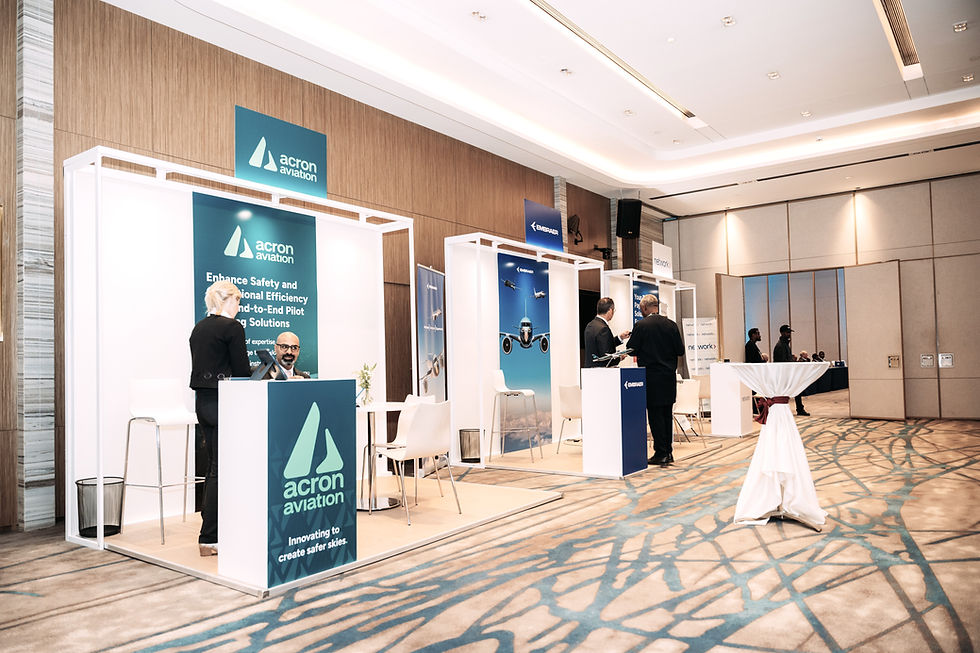
Whether exhibitions are the anchor of your East African marketing strategy or one channel within a broader mix, the quality of your physical presence at trade shows directly affects every other marketing effort. A strong exhibition stand builds credibility that your digital campaigns can leverage. A weak one undermines everything else.
Exhibit Africa designs, builds, and manages exhibition stands for international brands across Kenya, Ethiopia, and Rwanda. From custom builds for flagship events to modular solutions for companies exhibiting at multiple trade shows per year, we deliver end-to-end exhibition services that maximise the return on your trade show investment.
Ready to make your next exhibition in East Africa count? Contact Exhibit Africa and let us build the stand that makes your marketing strategy complete.
Comments