

Shipping and Setup for Trade Shows in East Africa
International exhibitors planning their first trade show in East Africa almost always start with the same assumption: they will design the stand at home, ship it to Nairobi or Addis Ababa, and have someone install it on arrival. In our experience, this approach is not just risky. It is nearly impossible to execute well and almost always more expensive than building locally.

Why Shipping Exhibition Stand Materials to East Africa Rarely Makes Sense
The idea of shipping a stand from Europe, North America, or Asia sounds straightforward until you start working through the actual logistics. What begins as a simple freight quote quickly becomes a chain of costs, dependencies, and risks that stack against you at every stage.
International freight for exhibition materials is expensive. Whether you ship by sea or air, the costs for crating, transport to port, ocean or air freight, insurance, destination handling, and inland transport to the venue add up fast. For a mid-sized custom stand, shipping costs alone can equal or exceed the cost of building the same stand locally in East Africa.
Then there is customs clearance. Kenya is not a member of the ATA Carnet system, which means you cannot use the streamlined temporary import process available in most of Europe and North America. Instead, you must work through Kenya's Temporary Import Bond (TIB) system, which requires a licensed clearing agent, an Import Declaration Form lodged through the Kenya TradeNet system, a customs bond covering potential duties, detailed documentation including commercial invoices, packing lists, certificates of origin, and proof that the goods are for exhibition use only. The process takes time, involves multiple government touchpoints, and any error or discrepancy in your paperwork can delay release of your goods by days.
Event organisers in Kenya recommend that sea freight arrives at Mombasa port at least 15 days before the exhibition opens, and air freight reaches Nairobi at least 10 days before. Factor in transit times and you are looking at a total lead time of six to eight weeks for sea freight and two to three weeks for air. If anything delays your shipment, whether weather, port congestion, or a documentation error, you have very little room to recover before the event opens.
And when the stand finally arrives, you still need a local crew to unpack, transport it to the venue, and install it. If any component was damaged in transit, you are sourcing replacements locally under extreme time pressure, often at premium cost. We have seen international exhibitors arrive at venues with incomplete or damaged stands, scrambling to patch things together hours before the event opens. It is stressful, expensive, and entirely avoidable.

The Hidden Costs of Shipping Exhibition Goods That Exhibitors Do Not Expect
Beyond the obvious freight and customs costs, there are expenses that catch international exhibitors off guard every time.
Customs bond fees tie up capital for the duration of the temporary import period. If your re-export documentation is not processed correctly after the event, the bond is forfeited and you are charged full import duties and VAT on the declared value of your goods. This is not theoretical. It happens regularly to exhibitors who are unfamiliar with the process.
Storage charges accumulate if your goods arrive before the clearing agent has completed documentation, or if the venue is not yet open for exhibitor access. Port and airport storage in Nairobi is charged daily and adds up quickly.
Packing and crating costs for international exhibition freight are significantly higher than domestic transport packaging. You need robust flight cases, proper crating, and weatherproofing, none of which is cheap and all of which adds weight and volume to your shipment, increasing freight costs further.
Return shipping after the event mirrors the inbound costs. You pay for repacking, transport to port or airport, customs re-export processing, and international freight back to your home country. For a single event, you are effectively paying for the full round trip of materials that could have been sourced, built, and disposed of locally for less.
When you add all of these costs together, shipping a stand for a single trade show in East Africa almost always costs more than building an equivalent or better stand locally.

Why Local Exhibition Stand Fabrication in East Africa Is the Smarter Approach
Building your exhibition stand locally with an East African stand builder is not a compromise. In most cases, it delivers a better outcome at lower cost with far less risk.
Cost is the most immediate advantage. Local materials, local labour, and local logistics operate at local price points. There is no international freight, no customs bond, no clearing agent fees, and no return shipping costs. The entire budget goes into the stand itself rather than into moving materials across continents.
Risk elimination is equally important. When your stand is built locally, there is no shipping delay to worry about. There is no customs clearance that might stall. There is no damaged component that needs emergency replacement. The builder sources materials in-country, fabricates close to the venue, and delivers and installs directly. If something needs adjusting during setup, the same team that built it is on site to fix it immediately.
Venue knowledge is an advantage that international exhibitors consistently underestimate. A local builder who has worked at KICC Nairobi, the Sarit Expo Centre, the AICC in Addis Ababa, or the Diamond Jubilee Expo Centre in Dar es Salaam dozens of times knows every quirk of each venue. They know the ceiling heights, the power supply configurations, the loading dock access routes, the floor load capacities, and the unwritten rules that event organisers enforce but do not always document. This knowledge prevents problems before they start.
Quality is not sacrificed. The best exhibition stand builders in East Africa produce work that meets international standards. They work with the same types of materials, printing technologies, and finishing techniques used globally. The difference is that they do it without the logistical overhead of shipping everything from another continent.

What You Still Need to Ship and How to Handle It
While the stand itself should be built locally, there are items that international exhibitors will still need to bring to East Africa.
Product samples and demonstration equipment are the main category. If you are exhibiting medical devices, construction machinery components, food processing equipment, or technology products, these need to travel with you. For small or lightweight samples, carrying them as accompanied baggage is often the simplest and cheapest approach. Many experienced exhibitors in East Africa avoid freight entirely for samples by packing them in checked luggage or hand carry cases.
For larger or heavier product samples that must be shipped, work with a clearing agent recommended by the event organiser and start the process early. Send your commercial invoice and packing list to the agent as soon as your shipment is confirmed. Declare values accurately. Pack exhibition samples separately from any promotional materials or giveaways. Label every case clearly with the exhibition name, your company details, and the words "FOR EXHIBITION" prominently displayed.
Branded promotional materials such as brochures, business cards, and small giveaways can often be printed locally in Nairobi at competitive quality and cost. This avoids the weight, volume, and customs complexity of shipping printed materials internationally. Your local stand builder or a local print supplier can handle production from your supplied artwork files.
Understanding Venue Setup Timelines at East African Exhibition Centres
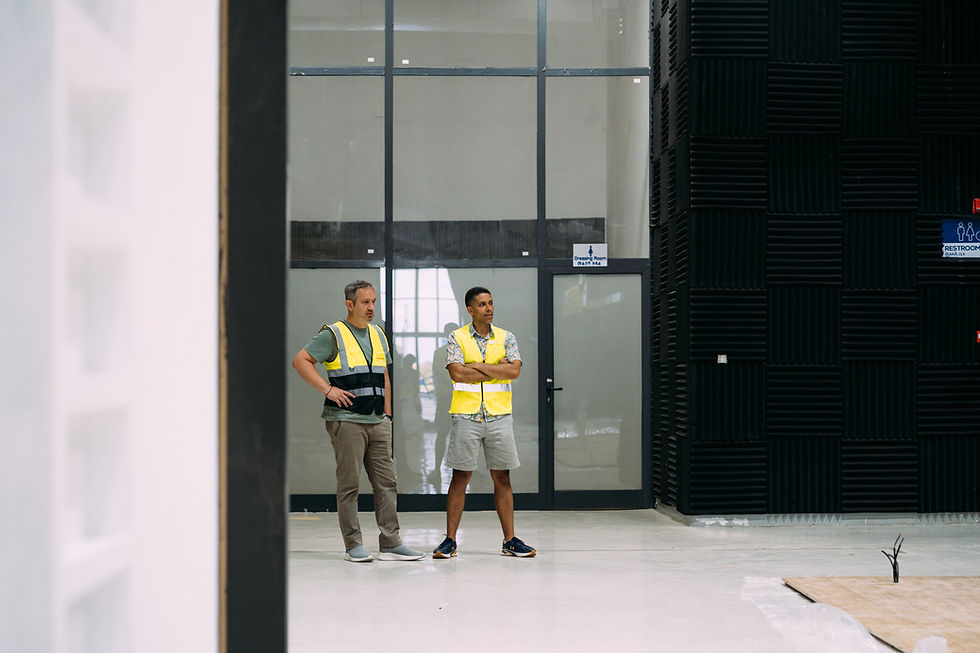
Once your stand is being built locally and your product samples are in-country, the final logistics challenge is the venue setup itself.
Setup windows at East African venues are typically one to two days before the event opens. Large custom stands and country pavilions may negotiate earlier access, but most exhibitors work within the standard window. Time is tight and every hour matters.
At KICC Nairobi and the Sarit Expo Centre, loading dock access, freight elevator capacity, and hall access routes can affect how quickly materials move into position. A local builder who has worked at these venues regularly knows the fastest routes, the best times to avoid congestion, and the technical team contacts to resolve issues quickly.
Electrical and technical services including power connections, lighting, rigging, internet, and AV support are ordered through the event organiser, often with deadlines weeks before the event. Late orders attract surcharges or may not be fulfilled. Kenya operates on 240V, 50Hz with British-style three-pin plugs. Ethiopia uses 220V, 50Hz with European two-pin plugs. If you are bringing any equipment from overseas, confirm compatibility and bring appropriate adaptors.
Your local stand builder should manage the entire setup process, from delivery and construction through graphic installation, furniture placement, electrical connection, and final quality checks. Your team's role during setup should be reviewing brand alignment and testing product demonstrations, not managing a construction site.

Setup Day Best Practices for Exhibition Stands in East Africa
Even with a local builder managing the stand construction, there are things your team should do on setup day to ensure everything is right.
Arrive at the venue as early as the access window allows. Walk the build as it progresses and flag any brand or quality issues early while changes are still easy to make. Test every piece of equipment you brought from overseas. Run screens, demonstration units, and presentation devices through a full cycle. Check that charging cables, adaptors, and backup batteries are working. Any fault discovered during setup is a minor inconvenience. The same fault discovered in front of visitors is a major problem.
Do a final walkthrough once the stand is complete. Check graphics for alignment and damage. Confirm that lighting highlights the right areas. Ensure furniture is clean and positioned correctly. Verify that storage areas are organised and hidden from visitor view. Take photographs of the completed stand for records, reporting, and social media content.
Confirm the dismantling timeline with your builder and the event organiser before the event opens. Most East African venues require full stand removal within 24 hours of the event closing. Your builder should have a dismantling plan ready and a crew scheduled for the final day.

Skip the Shipping and Build Your Exhibition Stand in East Africa
Shipping exhibition materials to East Africa for a single event is expensive, unpredictable, and in most cases unnecessary. Building locally is faster, cheaper, lower risk, and delivers results that match or exceed what you could ship from overseas.
Exhibit Africa designs, fabricates, and installs exhibition stands locally across Kenya, Ethiopia, and Rwanda. From custom builds at KICC and the Sarit Expo Centre to country pavilions at events in Addis Ababa and Dar es Salaam, we handle design, materials sourcing, construction, venue logistics, and on-site management. Your stand is built by the same team that installs it, at the same venue they have worked at dozens of times.
Planning a trade show in East Africa? Contact Exhibit Africa and let us build your stand on the ground, on time, and on budget.
Comments